Showing posts with label Eve. Show all posts

Tuesday, November 4, 2025

Was Adam With Eve When She Spoke With The Serpent?

Was Adam With Eve When She Spoke With The Serpent?

Bodie Hodge, M.Sc., B.Sc., PEI

Biblical Authority Ministries, November 4, 2025 (Donate)

Introduction

Soon after creation, the serpent, influenced by Satan who had just sinned himself, deceived the Woman (later named Eve) into eating the fruit of the Tree of the Knowledge of Good and Evil. They conversed through the intellect of the devil’s use of the serpent.

Was Adam with her when they spoke? Or did he walk immediately after and miss the conversation? He obviously knew what fruit it was an ate when she gave it to him. This question has intrigued Christians for ages. Let’s jump into it.

Serpent potentially holding the unique fruit; Image requested by Bodie Hodge (Grok)

The Scriptures Reveal 

Genesis 3:1-6 (NKJV) says:

Now the serpent was more cunning than any beast of the field which the LORD God had made. And he said to the woman,

“Has God indeed said, ‘You shall not eat of every tree of the garden’?”

And the woman said to the serpent,

“We may eat the fruit of the trees of the garden; “but of the fruit of the tree which is in the midst of the garden, God has said, ‘You shall not eat it, nor shall you touch it, lest you die.’”

Then the serpent said to the woman,

“You will not surely die. “For God knows that in the day you eat of it your eyes will be opened, and you will be like God, knowing good and evil.”

So when the woman saw that the tree was good for food, that it was pleasant to the eyes, and a tree desirable to make one wise, she took of its fruit and ate. She also gave to her husband with her, and he ate.

Assessment

When reading this, there is no Scripture saying that Adam was with the Woman when she was deceived. It only mentions Adam when she ate.  Many believe the phrase “with her” is out of context when applying it to the events in the previous section because the Hebrew gives a new paragraph standing beginning in verse 6 (“So when the woman saw…”). 

Many believe a small amount of time passed to permit Adam to arrive on the scene to see her pick the fruit, eat it and give some to him to eat. Part of the reason for this small amount of time is due to events that took place between the Woman speaking to the serpent and Adam eating.

For example, the Woman saw that the fruit was good to eat.  How could she know the fruit was good to eat? Well, it is likely that she saw something, such as an animal, eat some of the fruit – maybe even the serpent himself. Keep in mind that man was forbidden to eat from the Tree of the Knowledge of Good and Evil but the Bible gives no indication that other things couldn’t have eaten from it (e.g., animals). 

Serpent holding a fruit prior to being cursed to crawl on its belly; Image requested by Bodie Hodge (Grok)

Another reason is due to Adam listening to the voice of His wife.  Many think there was a conversation between Adam and the Woman after her conversation with the serpent. This will be discussed in more detail in the coming paragraphs.  

In fact, the Bible never says the serpent spoke to Adam and the Woman but only the Woman.  Only the Woman responded, and it doesn’t make sense that Adam wouldn’t respond at all if he was involved in the conversation—especially with the blatant errors spoken in the conversation. 

Logically, it is easier to deceive one person, than two as well. Recall that Hebrew gives a new paragraph standing to verse 6. The NAS, KJV and NKJV also honor this as a distinct change confirming the short time reference ‘When the woman’.  There was definitely some small amount of time between this—the question becomes—was it enough time for Adam to arrive?  Expositor Dr. John Gill says of Genesis 3:6:

and gave also to her husband with her; and gave also to her husband with her; that he might eat as well as she, and partake of the same benefits and advantages she hoped to reap from hence; for no doubt it was of good will, and not ill will, that she gave it to him; and when she offered it to him, it is highly probable she made use of arguments with him, and pressed him hard to it, telling him what delicious food it was, as well as how useful it would be to him and her. The Jews infer from hence, that Adam was with her all the while, and heard the discourse between the serpent and her, yet did not interpose nor dissuade his wife from eating the fruit, and being prevailed upon by the arguments used; or however through a strong affection for his wife, that she might not die alone, he did as she had done:[1]

Gill believes there was a discussion between the Woman and Adam after her deception. Gill believed the Woman was indeed alone when deceived:

And he said to the woman; being alone, which he took the advantage of; not the serpent, but Satan in it; just as the angel spoke in Balaam’s ass;[2]

John Calvin says in his commentary:

“And gave also unto her husband with her. From these words, some conjecture that Adam was present when his wife was tempted and persuaded by the serpent, which is by no means credible. Yet it might be that he soon joined her, and that, even before the woman tasted the fruit of the tree, she related the conversation held with the serpent, and entangled him with the same fallacies by which she herself had been deceived. Others refer the particle (immah,)" with her," to the conjugal bond, which may be received. But because Moses simply relates that he ate the fruit taken from the hands of his wife, the opinion has been commonly received, that he was rather captivated with her allurements than persuaded by Satan’s impostures. {1} For this purpose the declaration of Paul is adduced,

‘ Adam was not deceived, but the woman.’ ( #1Ti 2:14).

But Paul in that place, as he is teaching that the origin of evil was from the woman, only speaks comparatively. Indeed, it was not only for the sake of complying with the wishes of his wife, that he transgressed the law laid down for him; but being drawn by her into fatal ambition, he became partaker of the same defection with her. And truly Paul elsewhere states that sin came not by the woman, but by Adam himself, (#Ro 5:12). Then, the reproof which soon afterwards follows ‘Behold, Adam is as one of us,’ clearly proves that he also foolishly coveted more than was lawful, and gave greater credit to the flatteries of the devil than to the sacred word of God.” [3]

So, John Calvin didn’t see that Adam needed to be with the Woman when she was deceived. Even John Trapp’s commentary leaves open the possibility that Adam wasn’t with the Woman the whole time:

And gave it also to her husband. It is probable, saith the same author, that Adam stood by all the time of the disputation; therefore his sin was the greater, that he rebuked not the serpent, &c. And again, I cannot believe, said he, but that the devils in the serpent did as well tempt Adam as Eve, though first they began with her, as a further means of enticing him. Others {e} are of another mind, as that the tempter set upon the woman alone and apart from her husband, as she was curiously prying into the pleasures of the garden; that the serpent crept into Paradise unseen of Adam, who was to keep beasts out of it; that he remained there without being seen by him, and crept out again when he had done his feat; that when she gave him the fruit, she gave him also a relation of the serpent’s promise concerning the force of that fruit, that it would make them wise as God, knowing good and evil, &c., whence he is said to have hearkened to her voice. {#Ge 3:17} And surely, every Adam hath still his Eve, every David his Bathsheba, a tempter in his own bosom, his own flesh, whereby he is so soon "drawn away, and enticed" as a fish by the bait, —beauty {f} is a hook without a bait, {g} as one saith, —till "when lust hath conceived," as here it did in Eve, "it bringeth forth sin; and sin, when it is finished, bringeth forth death". {#Jas 1:14,15} Satan hath only a persuasive sleight, not an enforcing might. It is our own concupiscence that carrieth the greatest stroke.[4]

Matthew Poole’s commentary agrees:

Gave also unto her husband with her, who by this time was returned to her, and who now was with her; or, that he might eat with her, and take his part of that fruit.[5]

In the Genesis Record, Henry Morris says:

As the prototype of all sinners, Eve felt impelled to lead Adam to participate in the same sin.  She therefore plucked more of the fruit and brought it to her husband, urging him to eat it as well.  No doubt, she used the same arguments the serpent had used, also adding the personal testimony that she had eaten the delicious fruit herself without harmful effect. 

Adam, however, “was not deceived” (I Timothy 3:14).  Whether this statement by the Apostle Paul means that Adam was fully aware that he was willfully defying God, or whether it simply means that Adam was not the initial one whom Satan attacked with this deception, may not be completely clear.[6] 

Paul says in 1 Timothy:

And I do not permit a woman to teach or to have authority over a man, but to be in silence. For Adam was formed first, then Eve. And Adam was not deceived, but the woman being deceived, fell into transgression. (1 Timothy 2:12-15, NKJV)

The passage says the Woman and not Adam was deceived but this still doesn’t shed light on whether Adam was with the Woman or if he showed up afterwards. In both cases (Adam with the Woman or Adam not with the Woman), 1 Timothy 2:12-15 could easily apply. If Adam was not with the Woman, then obviously he wouldn’t have been deceived. He could have eaten knowing he was sinning, regardless of knowing the serpent had deceived Woman. Genesis 3:17 (NKJV) says:

Then to Adam He said,

“Because you have heeded the voice of your wife, and have eaten from the tree of which I commanded you, saying, ‘You shall not eat of it’:    “Cursed is the ground for your sake;    In toil you shall eat of it   All the days of your life.

There is no indication that Adam listened to the voice of the serpent but did listen to the voice of his wife. Since God said that Adam listened to the voice of his wife, then two scenarios could apply:

1.     Scenario 1: This was her voice when she responded to the serpent.

2.     Scenario 2: This was a conversation after she spoke with the serpent. 

Analyzing Scenario 1

If Adam listened to the voice of his wife when she responded to the serpent then why didn’t he correct her when she misquoted God and changed what God said? The woman said:

“From the fruit of the trees of the garden we may eat; but from the fruit of the tree which is in the middle of the garden, God has said, ‘You shall not eat from it or touch it, or you will die.’"

The Woman left out some key words and then added to God’s Word:

"From any tree of the garden you may eat freely; but from the tree of the knowledge of good and evil you shall not eat, for in the day that you eat from it you will surely die."

She removed “any” and “freely” but added “or touch it” and even misstated “surely die” as merely “die”. If Adam listened to his wife’s words here as God said, then he was deceived into believing something other than what God said. However, 1 Timothy indicates Adam was not deceived so this couldn’t be the case.

Also, since he was not deceived, why didn’t Adam correct his wife’s mistaken response, especially since he was the one responsible for his wife (James 4:17)? If this were the case, he would have been sinning before he ate, yet the Lord didn’t mention it or give a rebuke for these potentially failed actions.    

Also, let’s not miss something big here. The only think the Woman said, was not to eat. If Adam listened to the voice of his wife, and if this was what is being referenced, then Adam shouldn’t have eaten! He would have been defying what she said so that he could eat.

Analyzing Scenario 2

The Woman conversed with Adam and he ate (but not by deception), thus with this scenario they had to have a conversation soon after the Woman conversed with the serpent which is what Gill, Calvin, Trapp, Morris, and others have pointed out. 

God said nothing of Adam listening to the voice of the serpent but only that of the Woman. In fact, Adam only blamed his wife, not the serpent, which indicates that he probably wasn’t aware of the serpent’s discussion with the Woman. 

Adam and Eve eating from the fruit and sinning against God; Image requested by Bodie Hodge (ChatGPT)

Though this conversation between Adam and his wife is not mentioned in the early portions of the text in Genesis 3, it does give further support that the time reference in verse 6 indicates that time had passed from the speaking to the serpent and the Woman taking a bite and giving some to her husband. Apparently, there were events that were not entirely recorded in detail such as this conversation.    

This time reference and new conversation between the Woman and Adam is further support that the phrase “with her” in Genesis 3:6 would be out of context with the prior events—when she was being deceived by the serpent. So, Scenario 2 seems much more plausible, though one should not be dogmatic.

Conclusion

This surely didn’t take long from the serpent’s deception, to when the Woman desired the fruit and spoke to her husband and then ate[7]. But one cannot be dogmatic that Adam was there the whole time from what little is given in Scripture.

Regardless though, Adam was with his wife when she ate so he had no excuse for not knowing what he ate. He knew it was fruit from the Tree of the Knowledge of Good and Evil and knowingly sinned when he ate.   

Recommended Resource

The Fall of Satan


Bodie Hodge, Ken Ham's son in law, has been an apologist since 1998 helping out in various churches and running an apologetics website. He spent 21 years working at Answers in Genesis as a speaker, writer, and researcher as well as a founding news anchor for Answers News. He was also head of the Oversight Council. 

Bodie launched Biblical Authority Ministries in 2015 as a personal website and it was organized officially in 2025 as a 501(c)(3). He has spoken on multiple continents and hosts of US states in churches, colleges, and universities. He is married with four children.

Originally at Answers in Genesis; Edited; Republished by permission.


[1] John Gill’s Exposition, John Gill, Adapted from Online Bible, Larry Pierce, Notes on Genesis 3:6


[2] John Gill’s Exposition, John Gill, Adapted from Online Bible, Larry Pierce, Notes on Genesis 3:1


[3] Calvin’s Commentaries, John Calvin, Adapted from Online Bible, Larry Pierce, Notes on Genesis 3:6

[4] John Trapp Commentary, John Trapp, Adapted from Online Bible, Larry Pierce, Notes on Genesis 3:6


[5] Matthew Poole’s Commentary, Matthew Poole, Adapted from Online Bible, Larry Pierce, Notes on Genesis 3:6

[6] The Genesis Record, Dr Henry Morris, Baker Book House, 1976, Thirty-sixth Printing, Page 114

[7] In fact, it wouldn’t have taken long for them to sew fig leaves together either.  After they ate, felt ashamed and put together fig leaf coverings, the serpent still hadn’t gone far. The Lord was able to call down the curse on the serpent which wasn’t far off.  

Friday, June 27, 2025

Who Sinned First – Adam Or Satan?

Who Sinned First – Adam Or Satan?

Bodie Hodge, M.Sc., B.Sc., PEI

Biblical Authority Ministries, June 27, 2025 (Donate)

When Christians or others speak of Adam being the first sinner, this refers to Paul’s reflection of Genesis saying:

Therefore, just as through one man sin entered into the world, and death through sin, and so death spread to all men, because all sinned. (Romans 5:12, NKJV, all passages)

It means that sin entered the world through Adam—that he is the one credited with sin’s entrance and hence the subsequent entrance of death and suffering and the need for a Savior and a last Adam (1 Corinthians 15:45). When we look back at Genesis 3, it is true that Satan had rebelled and also the Woman (later named Eve) sinned prior to Adam.

The Fall of Satan book has more topics like this

The Sin Of The Woman (Eve)

There were several things that Eve did wrong prior to eating the fruit. When the serpent (who was speaking the words of Satan) asked in Genesis 3:1: “Has God indeed said, ‘You shall not eat of every tree of the garden’?” her response was less than perfect:

And the woman said to the serpent, “We may eat the fruit of the trees of the garden; but of the fruit of the tree which is in the midst of the garden, God has said, ‘You shall not eat it, nor shall you touch it, lest you die.’" (Genesis 3:2–3; emphasis added)

Compare this to what God had commanded in Genesis 2:16–17:

And the LORD God commanded the man, saying, “Of every tree of the garden you may freely eat; but of the tree of the knowledge of good and evil you shall not eat, for in the day that you eat of it you shall surely die.”

Besides mimicking the serpent’s use of “God” instead of “Lord God”, the Woman made four mistakes in her response:

1.  She added the command not to touch the fruit “Nor shall you touch it”.  This is in direct contradiction with the command of Adam to tend the Garden (Genesis 2:15) which would constitute touching the tree and the fruit from time to time. It also makes the command from God to be exceptionally harsh.   

2.  She amended that God allowed them to freely eat from every tree. This makes God out to be less than gracious. 

3.  She amended that God allowed them to freely eat from every tree. Again, this makes God out to be less than gracious.   

4.  She amended the meaning of die. Let me explain, the Hebrew in Genesis 2:17 is “die die” (muwthmuwth), which is often translated as “surely die” or literally as “dying you shall die”, which indicates the beginning of dying, an ingressive sense.  In other words, if they would have eaten the fruit, then Adam and Eve would have began to die and would return to dust (which is what happened when they ate per Genesis 3:19).  If they were meant to die right then, Genesis 2:17 should have used muwth only once as is used in the Hebrew meaning dead, died, or die in an absolute sense and not beginning to die or surely die as die-die is commonly used.  What Eve said was “die” (muwth) once instead of the way God said it in Genesis 2:17 as “die-die” (muwthmuwth).  So, she changed God’s word to appear harsher again by saying they would die almost immediately.

Often, we are led to believe that Satan merely deceived Eve with the statement that “You will not surely die?” in Genesis 3:4. But we neglect the cleverness/cunningness that God indicates that the serpent had in Genesis 3:1. Note also that the exchange seems to suggest that Eve may have been willingly led: that is, she had already changed what God had said.

If you take a closer look, the serpent argued against Eve with an extremely clever ploy. He went back and argued against her incorrect words using the correct phraseology that God used in Genesis 2:17 (“die-die” (muwthmuwth)). This, in a deceptive way, used the proper sense of die that God stated in Genesis 2:17 against Eve's mistaken view. Imagine the conversation in simplified terms like this:

God says: Don’t eat or you will begin to die.

Eve says: We can’t eat or we will die immediately.

Serpent says: You will not begin to die?

This was very clever of Satan using God’s Words deceitfully against her. This is not an isolated incident either. When Satan tempted Jesus (Matthew 4), Jesus said “it is written” and quoted Scripture (Matthew 4:4). The second time, Satan tried quoting Scripture (i.e., God) deceptively just as he had done to Eve (Matthew 4:5–6). Of course, Jesus was not deceived, and corrected Satan’s twisted use of Scripture with a proper use of Scripture (Matthew 4:7). Because of Eve’s mistaken response of God’s command, it was easier for her to be deceived by Satan’s misuse of what God said.

As mentioned, another point that can be brought out about the Woman was her adoption of Satan’s reduction of “LORD God” to simply “God” in Genesis 3:3. This mimicked the way Satan addressed God when he questioned the Woman in Genesis 3:1. Satan had degraded God by not using the term God had used in Genesis 2:16-17 and the Woman followed suit. 

From her response though, she started down the slope into sin by being enticed by her own thoughts about the fruit (James 1:14–15). This culminated with her eating the forbidden fruit and giving some to her husband, who also ate.

The Woman sinned against God by eating the fruit from the Tree of the Knowledge of Good and Evil prior to Adam. However, at a closer look at the text—their eyes were not opened until after Adam ate (Genesis 3:7)—likely only moments later after they had a discussion (Genesis 3:17, “…heeded the voice of your wife…”).

Since Adam was created first (the Woman coming from him, but both being created in God’s image) and had been given the command directly and being the responsible party for his wife, it required his sin to bring about the Fall of mankind.[1] When Adam ate and sinned, they knew something was wrong and felt ashamed (Genesis 3:7). Sin and death had entered into the creation.

The Sin Of Satan

Like Eve, Satan had sinned prior to this. His sin was pride in his beauty (Ezekiel 28:15–17) and in trying to ascend and be like God (Isaiah 14:14) while in heaven (Isaiah 14:12). He was cast out when imperfection was found in him (Isaiah 14:12; Revelation 12:9; Ezekiel 28:15) and then we find his influence in the Garden of Eden (Ezekiel 28:13; Genesis 3). His sin followed the same progression we read about in James 1:14-15.

Unlike Adam, Satan was never given dominion over the world (Genesis 1:28). So, his sin did not affect the creation, but merely his own person. This is likely why Satan went immediately for those who were given dominion. Continuing in his path as an enemy of God, he apparently wanted to do the most damage, so it was likely that his deception of the Woman happened quickly.

The Responsibility Of Adam

Adam failed at his responsibilities in two ways. He should have stopped his wife from eating, since he was there to observe exactly what she was about to eat (Genesis 3:6). Instead of correcting the words of his wife (Genesis 3:17), he listened to her and ate while not being deceived (1 Timothy 2:14).

Adam also arguably failed to keep/guard the garden as he was commanded in Genesis 2:15. God, knowing Satan would fall, gave this command to Adam, but Adam did not complete the task. But God even knew that Adam would fall short and had a plan specially prepared.

Many people have asked: “Why do we have to die for something Adam did?” The answer is simple—we are without excuse since we sin too (Romans 3:23, 5:12). But then some have asked: “Why did we have to inherit sin nature from Adam, which is why we sin?” We read in Hebrews:

Even Levi, who receives tithes, paid tithes through Abraham, so to speak, for he was still in the loins of his father when Melchizedek met him. (Hebrews 7:9–10)

If we follow this logic, then all of us were ultimately in Adam when he sinned. So, although we often blame Adam, the life we have was in Adam when he sinned, and the sin nature we received was because we were in Adam when he sinned. We share in the blame and the sin as well as the punishment.

But look back further. The life that we (including Eve) have came through Adam and ultimately came from God (Genesis 2:17). God owns us and gives us our very being (Hebrews 1:3), and it is He whom we should follow instead of our own sinful inclinations.

Since this sin of Adam, we have had the need for a Savior, Jesus Christ, the Son of God who would step into history to become a man and take the punishment for humanity’s sin. Such a loving feat shows that God truly loves mankind and wants to see us return to Him. God—being the Author of life, the Sustainer of life, and Redeemer of life—is truly the One we owe all things. 

Originally here: https://answersingenesis.org/sin/original-sin/who-sinned-first-adam-or-satan/; Edited; Republished by permission.


[1] Further to this, there are two views. 1. The world and their perceptions were not changed partially because Adam, who was still perfect and hadn’t eaten yet, was also in a position of dominion.  Had Adam sinned first, then it is possible that the same type of scenario could have occurred. In other words, had Adam eaten first, then when the Woman would have eaten, then they would have been ashamed, sin enter, etc. When both of those who had dominion fell, then the extend of their dominion also felt repercussions, but so long as one of them still had perfection, then the world did not appear subjected to it – likely for the sake of the other.  This is why when Adam ate, they then felt ashamed. 2.  Another view though is possible, in that Adam, being the federal head for both he and his wife (1 Corinthians 11:8-12), was the only one required to eat to cause sin and death to enter. Regardless, when Adam ate, sin, shame, and death entered the creation in full force (Romans 5:12).  

Saturday, June 7, 2025

Why Is There Death And Suffering?

Why Is There Death And Suffering?

Bodie Hodge, M.Sc., B.Sc., PEI

Biblical Authority Ministries, June 7, 2025 (Donate)

We live in a broken world—marred with suffering, death, broken relationships, disasters, wars, famines, and diseases. People often ask, “will it ever end?”, “how did the world get like this?”, “why did God make the world like this?”

Image from Presentation Library

These are great questions—did you know that the Bible answers these questions? Let’s start with the last question first and work backwards.

Why Did God Make The World Like This?

The answer to this is quite simple—He didn’t. It’s a common misconception that God made the world full of all this evil and terrible things like suffering and death. God did not make it that way.

Instead, a perfect God of life made a perfect world at creation. A world with no death in it. That is what we expect from a perfect God.

God miraculously created all things in 6 days and rested on the seventh. This is not too hard for an all-powerful God. Consider upon the completion of Creation Week that God declared all things “very Good”.

·       Then God saw everything that He had made, and indeed it was very good. So the evening and the morning were the sixth day. Genesis 1:31, NKJV

Because God is perfect, we expect His works to be perfect—including the work of creation. Consider:

·       He is the Rock, His work is perfect; For all His ways are justice, A God of truth and without injustice; Righteous and upright is He. Deuteronomy 32:4, NKJV

·       Every good thing bestowed and every perfect gift is from above, coming down from the Father of lights, with whom there is no variation, or shifting shadow. James 1:17, NKJV

God didn’t make the world full of brokenness, pain, and sorrow. That now brings us to the next question.

How Did The World Get Like This?

Our perfect creation was short lived. In only the 3rd chapter in the Bible, we read of the historical account that devasted everything. Our mutual ancestors rebelled against God and committed high treason against the God who create them.

Adam and Eve sinned against God defying His command not to eat from a particular tree. They elevated their own thoughts and actions to supersede what an all-powerful, just, and truthful God had commanded them. Instead of being holy and happy, they were now thrust into a world of sin (i.e., rebellion against God in thought, word, or deed) and misery.

God, being perfectly just, had to punishment mankind for their sin—the punishment for sin was death (consider Genesis 2:17 and 3:19).  Furthermore, the entire dominion of man had now fallen with a curse—animals and the ground itself!

Because of man’s sin, death and suffering now exists. It is the due punishment for our sin against God.

Now you might be thinking—why am I being punished for something Adam and Eve did? Get ready to have your mind blown—you and I were a part of that rebellion (Romans 5:12 and Hebrews 7:9-10) and we continue to sin in our own right (Romans 3:23). Adam lived 930 years and has one sin on record. You and I have more sins in one day that we can count!

We all deserve death for our sin (culminating in an eternal death where the wrath of God is on us. God is a God of life and death is like a parasite on good and life itself. God originally created the world "very good" (Genesis 1:31), meaning there was no death, disease, or suffering. For instance, man and animals were originally vegetarian (Genesis 1:29–30), and there was no predation, pain, suffering, violence, diseases, wars, or tornadoes and hurricanes.

The world changed due to sin and we are given a taste of what life is like without God and His blessings.

The Origin Of Death And Suffering

Death, and the associated anguish and pain and suffering, entered the world through the sin of Adam and Eve. When they disobeyed God by eating from the Tree of the Knowledge of Good and Evil (Genesis 2:17; 3:6), they brought a curse upon all creation. This event, known as the Fall or the Curse or the Corruption, introduced death, suffering, disease, and decay into the world (Romans 5:12; Romans 8:20–22). From that point forward, all of creation was subjected to corruption because God is no longer sustaining it in a perfect state.

Take note that this view directly contradicts the false religious idea that millions of years of animal death and suffering existed before man. Accepting long ages (as in atheistic evolution or old-earth-syncretized-with-Christianity models) undermines the Gospel, because it puts death before sin. Death before sin is a huge theological problem for any old earth worldview that tries to mix the secular religious story of origins with the Bible.

If death came before sin, then death cannot be the penalty for sin but part of God’s “very good” and “perfect” creation, which undermines the whole reason Christ came to die! Christ died to take the infinite and eternal punishment for our sin—because Christ, who is the infinite and eternal God, was the one in a position to take the these eternal and infinite consequence for our sinful treason!

Human And Animal Death (e.g., Genesis 1:29-30)

Human death is both physical and spiritual. Adam’s sin brought physical death (the body returning to dust) and spiritual death (separation from God—unless we are saved will be an eternal separation with the wrath of God abiding on sinners in hell forever).

All people inherit a sin nature from Adam (called original sin) and are under the same sentence of death for our individual sins (Romans 5:12–19). Animal death and suffering are also a consequence of the Fall, though animals are not moral beings like man (e.g., they were cursed for their involvement in sin through the serpent and Satan’s use of it in Genesis 3). God’s original creation was free of carnivory, predation, and diseases; these came only after the Fall—with the majority of the fossil record being a testimony to the Flood. This now brings us to the first question!

Will It Ever End? Yes—The Solution Is To Receive Jesus Christ

Jesus the Christ or Messiah is the only solution to death and suffering (John 3:16-18, 14:6; Acts 4:12, Roman 10:6). Jesus, the infinite Son of God, came into the world to take the punishment we deserve brought by Adam’s sin.

By living a sinless life and dying on the cross, Jesus took the penalty for sin upon Himself (Isaiah 53:5–6; 1 Peter 2:24). His resurrection demonstrated victory over death (1 Corinthians 15:21–22, 26).

Through repentance (truly being sorry for your sin) and faith in Jesus Christ—who He is, His death, burial and resurrection—one can receive eternal life, spiritual restoration, and the promise of a future where suffering, tears, death, famines, wars, and pain will be no more. Revelation 21:4 describes the new creation as a place where God will “wipe away every tear,” and “there shall be no more death, nor sorrow, nor crying.”

Again, God will make things new (a new heaven and a new earth) and perfect for an eternity of good and amazing things to which we can’t even comprehend on this side of heaven. God will one day restore creation to its original perfection (called Consummation).

This includes the removal of the curse and the reestablishment of a death-free, suffering-free world for those who are in Christ. The current suffering is temporary and will be replaced by eternal joy in God’s presence (Romans 8:18; Revelation 22:3).

Take hope in that. Those in Christ have passed from death to life (John 5:24; 1 John 3:14) and look forward to an eternity with loving and infinite God.


Monday, May 5, 2025

Cain’s Wife—The Super Obvious Answer!

Cain’s Wife—The Super Obvious Answer!

Bodie Hodge, M.Sc., B.Sc., PEI

Biblical Authority Ministries, May 5, 2025 (Donate)

In the world-famous Scopes Trial in Dayton, Tennessee, the non-Christian lawyer (Clarence Darrow) posed the question “where did Cain get his wife?” to a Christian lawyer who had taken the stand (William Jennings Bryan) to defend Christianity.

Bryan, was stumped by the question and had no answer.[1] With the world tuning into this famous trial, it sent shockwaves throughout America and the world. For years now, this same question is posed to Christians constantly and many Christians still falter trying to give an answer.

Image from Presentation Library

Is it a hard question to answer? Not really—when you stand on the authority of God’s Word.

Cain’s wife was one of his sisters or possibly a close female relative, such as a niece—still a descendant of Adam and Eve. Regardless, brothers and sisters originally had to marry. All humans descend from the original couple, Adam and Eve—not some mythological alleged first wife (e.g., the Lilith myth) or some arbitrary alleged space alien or a uniquely different human race.

Early human history involved close-relative marriages, which were necessary and not morally wrong at that time—and is the obvious and logical answer.

1. Biblical Foundation

According to Genesis 4, after Cain killed Abel, he was marked and sent away. God says in verse 17, “Cain knew his wife, and she conceived.” However, the Bible does not mention where she came from. Genesis 5:4 clarifies that Adam “had other sons and daughters.” According to Josephus about 2,000 years, the Jewish legend was that Adam and Eve had 33 sons and 23 daughters.[2] Furthermore, when Cain sinned and murdered his brother, he was fearful of those who might take retaliation against him (Genesis 4:14). This is why a mark was put on him in the first place.

But this further shows that Adam and Eve had other children and there were plenty of descendants already accumulating. So, Cain had many siblings—both brothers and sisters—though most are unnamed in Scripture. He likely had many nieces and nephews by this time as well.

2. Be Fruitful And Multiply

Adam and Eve lived for centuries (Adam lived 930 years), and they had many children over that time. With such long lifespans and many offspring, the population could have grown quickly—though we can’t be certain. Nevertheless, there were plenty of descendants around for Cain to have married.

Cain goes to the land of Nod and builds a city. Some thought that there were other people in the land of Nod and Cain took a wife from those people—but this is a mistake. Nod means “land of wandering”. Thus, it was an unpopulated area. And a close analysis of the text shows no hints that Cain found a wife there but that she was already with him. 

Then Cain went out from the presence of the LORD and dwelt in the land of Nod on the east of Eden. And Cain knew his wife, and she conceived and bore Enoch. And he built a city, and called the name of the city after the name of his son — Enoch. (Genesis 4:16-17, NKJV)

3. Minimal Genetic Problems

Bear in mind that marrying close relatives was not a problem early in history because the human gene pool was still relatively pure. Genetic mutations that cause problems in close-relative marriages today had not accumulated yet. Thus, it was both biologically safe and necessary at that point for siblings to marry to fulfill God’s command to “be fruitful and multiply.” God had not forbidden it yet—that did not occur until the time of Moses.

Prior to Moses, Abraham married his half-sister Sarah (Genesis 20:12). Moses’ father married his aunt Jochebed (Exodus 6:20; Numbers 26:59).

Image from Presentation Library

4. Moral And Legal

The ban on marrying close relatives came with (Leviticus 18) as passed down through Moses. God gave this law in part because it became necessary due to the buildup of harmful mutations. Before that time, it was not considered immoral because there was no divine command against it. Our modern understanding of genetics helps us understand a subtlety of this law.

This is why modern legal systems all over the world rarely allow close intermarriage. They are influenced by biblical law.

5. Challenging Skepticism

One should reject claims that Cain’s wife was from another alleged race of people or a separate “human” group. We should also affirm that all people are descended from Adam and Eve, based on Genesis and New Testament passages like Acts 17:26 ("From one man he made all nations").

Adam is the first man (1 Corinthians 15:45-47) and Eve is the mother of all the living (Genesis 3:20). The faulty myth of Lilith being Adam’s first wife is simply that—a myth. There were no space alien races that had daughters that married Cain and Cain did not marry any human-animal hybrid or any human-angel hybrid (again another myth). 

6. The Hebrew

The Hebrew word for wife use for Cain’s “wife” is also very revealing. It is the Hebrew word for woman, that we translate as “wife”.

And Cain knew his wife (אִשָּׁה‎ ‘ishshah), and she conceived and bore Enoch. And he built a city, and called the name of the city after the name of his son — Enoch. (Genesis 4:17, NKJV)

It is in biblical Hebrew, “ishshah”. This name for woman was given when Adam first met his woman who was directly created from his bone and flesh (a task all too easy for God!). Adam said:

And Adam said: “This is now bone of my bones And flesh of my flesh; She shall be called Woman (ishshah), Because she was taken out of Man (ish/iysh).” (Genesis 2:23, NKJV)

Woman literally means that she was taken out of “man” or comes from “man”, who is Adam! This shows that a Hebrew speaker should automatically have recognized that Cain’s “wife” or “woman/ishshah” is a descendant of Adam/man by the very name she is called.

7. Island Isolates

Close marriages are often seen in isolates. This is when remote tribes had inhabited an area void of others or get trapped on an isolated island. The descendants are all related and close intermarriage occurred with these initial seed populations. Thus, from an anthropological perspective, close marriage is the obvious answer in small isolated groups mimicking the initial couple and their early descendants after Creation.

Sometimes, of course, it does cause genetic detriments. Starting with a pure line—as in the case of Adam and Eve—it takes longer to accumulate, unlike more modern isolate examples which can take precious few generations of inbreeding.

By the time of Moses, which is well after the population bottlenecks at the Flood and Babel, close intermarriage may have been a strong and growing genetic issue. After all, the ages of those in Moses’ day, was far less than the patriarchs just before him and those preceding the Flood. So, clearly there were genetic defects that were beginning to reign—which is expected in a sin-cursed and broken world since Genesis 3.

Conclusion

Marrying close relatives was not a problem originally and this was entirely encouraged. It was necessary for human multiplication—which was God’s command. It was not genetically dangerous at the time, and not considered morally wrong until God’s later commands. Thus, incest became a sin because God deemed it so for the times since Moses with the giving of the Law.

In short, the simple and obvious answer is that Cain married a sister—it’s possible it was a niece, but either way he a married a descendant of Adam and Eve and the human race is still purely the human race—which means we are all sinners sin need of a Savior.


[1] The World’s Most Famous Court Trial, Word-for-word report form 1925, Second Reprint Edition, 1990, Bryan College, Dayton, Tennessee, p. 302.

[2] Flavius Josephus, The Antiquity of the Jews, “Concerning the Posterity of Adam, and the Ten Generations From Him to the Deluge”, Translated by William Wiston, A.M. Auburn and Buffalo, John E. Beardsley, 1895.

Saturday, May 3, 2025

Shouldn’t Eve Have Been A Clone Of Adam?

 Shouldn’t Eve Have Been A Clone Of Adam?

Bodie Hodge, M.Sc., B.Sc., PEI

Biblical Authority Ministries, May 3, 2025 (Donate)

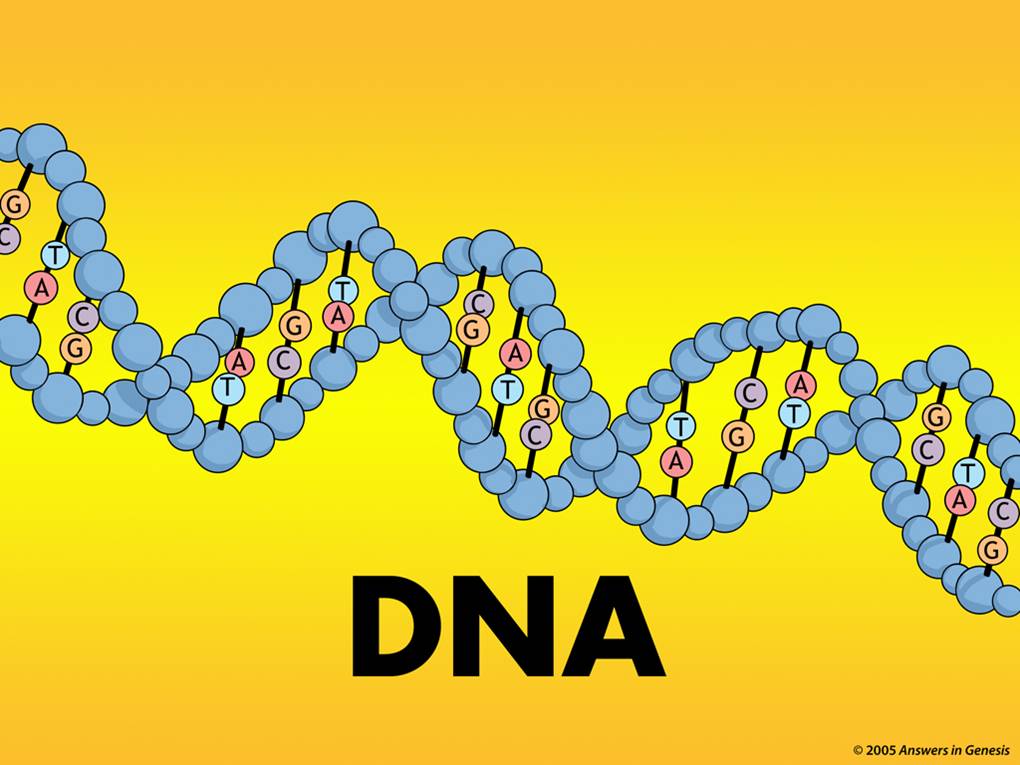
With the discovery of the double helix structure of DNA in 1953, the field of genetics grew exponentially. Our understanding of traits, genes, inheritance, and biology in general advanced at an unprecedented rate.

DNA (deoxyribonucleic acid) discovered in 1953 by James Watson and Frances Crick; Image from Presentation Library

As technology intelligently advanced, so did our grasp of genetics—XX for female and XY for male. Building on these achievements, scientists postulated the concept of cloning. A clone is an identical copy created based on the DNA of an individual.

Theoretically, it is possible to build another identical individual because the original DNA contains all the coded information necessary to create a duplicate. With the proper technology, one could make an exact copy—barring any errors in the process.

For example, if you wanted to create a copy of Mr. T (who starred in The A-Team as B.A. Baracus), you would need DNA from the original Mr. T. Similarly, to replicate Dwight Schultz (who played “Howling Mad” Murdock on The A-Team), you would need DNA from him. I know what you’re thinking—do we need two Murdocks? Of course, we could always use another Murdock!

Cloning became a reality in 1996 when Scottish scientists cloned a sheep named “Dolly,” making headlines worldwide. However, there were complications with Dolly. This milestone sparked ongoing ethical debates surrounding cloning.

An intriguing new question arose for biblical creationists in light of this research. In Genesis, Eve was made from Adam’s flesh and bone (rib, side), according to Genesis 2:21–23. This raises the question: shouldn’t Eve have been a clone of Adam—an identical replica?

According to modern cloning principles, one might expect Eve to be another “Adam”—male and physically identical to him.

However, what some overlook is that we’re talking about an all-knowing, all-powerful God! When we examine the creation of the woman (Eve), we see that God took Adam’s rib (Hebrew: tsela) and built a new person with an entirely new DNA strand. This wasn’t simply a cloned cell implanted into an ovum to gestate.

Instead, God brought forth Eve—a fully formed adult woman—by His creative power. This occurred during Creation Week. God used dust to create Adam and used Adam’s rib and flesh to create Eve. For an omnipotent God, this is no challenge.

Thus, Eve wasn’t a clone, but her material and life originated from Adam. We know she wasn’t a clone because she was female, per Scripture, possessing a different chromosome pair (XX vs. Adam’s XY). In fact, by modern standards, it’s easier to create a woman from a man’s DNA—since the X chromosome already exists in the man. Creating a man from a woman, who lacks a Y chromosome, would be more complex. Nevertheless, Scripture states that the woman was made for the man (1 Corinthians 11:9).

If Eve had the same DNA as Adam, they would both be male. But God intervened and uniquely created Eve and her DNA to be just as distinct as Adam’s. This means both were special creations—made in the image of an eternal God, with eternal value. God embedded the genetic diversity required to give rise to the various people groups seen today, right from the beginning.

Whether you resemble Mr. T, Dwight Schultz, or exhibit other variations in skin tone, height, or eye shape, we all carry genetic material originally created by God in Adam and Eve. Although we also have genetic mutations and glitches since sin and the curse in Genesis 3. Nevertheless, God gave humanity an incredible capacity for beautiful variation through generations. Thus, we are all related—and all in need of Jesus Christ to save us from our sin, regardless of what we look like.

Based on material I had originally written here: https://answersingenesis.org/adam-and-eve/shouldnt-eve-have-been-a-clone-of-adam/; Expanded; Republished by permission.


Thursday, May 1, 2025

Did Adam And Eve Have To Sleep Before The Fall?

Did Adam And Eve Have To Sleep Before The Fall? 

Bodie Hodge, M.Sc., B.Sc., PEI

Biblical Authority Ministries May 1, 2025 (Donate)

It’s hard to believe how many times I’ve been asked this question! Too many to count. So, I decided not to *snooze* on the answer.

Pre-Fall World

The Bible doesn’t tell us much about the world pre-Fall. But let’s try to ascertain what we can derive from what God has given us.

So the LORD God caused a deep <08639> sleep <08639> to fall upon the man, and he slept; then He took one of his ribs and closed up the flesh at that place. (Genesis 2:21)

This is specifically a deep sleep (Hebrew: tardemah, Strong’s number 08639). This implies that normal sleep probably did exist and this deep sleep is much more than normal sleep. So, I would lean toward Adam and Eve having some sort of regular sleep—a rest period. 

Some have argued that Adam and Eve could have been created merely with the capability to sleep initially. So, it does not necessarily show that they needed it. The argument goes that it was due to sin and Fall that now sleep became necessary. Thus there would be a connection to a sin-nature for the requirement of sleep.

Post-Fall World

Perhaps sleep, after the Fall, helps recoup a little of what was lost since man no longer had access to the Tree of Life (Genesis 3:22) after sin.

We know that the Tree of Life’s leaves in Revelation is for healing and possibly it was used to sustain man by God’s power so man didn’t need to sleep or needed minimal sleep. Of course, this is speculation so one should be cautious of this understanding of sleep being restricted to a post-Fall world. Perhaps one of the biggest downfalls to this position is that Jesus Christ—the very Son of God in the flesh—slept! 

Rest Is Good!

Though I would strongly suggest that sleep was a part of the original creation as a mimic of what God did during Creation Week. God, at the end of His work of creation, rested. Take note that a perfect God rested in a perfect world and we are to mimic what God did—not that God needed to rest due to His nature of being all-powerful but He did this as a basis for our workweek.

Moses presented the Israelites with The 10 Commandments and in Exodus 20:11, God, who directly etched this into the tablets, points out that the basis for God resting was a pattern for man to follow. So, man was created to rest. Bear in mind this was in the context of a weekly rest period.  

Rest though, doesn’t always imply sleep. But due to the fact man was created to rest, leans toward man needing both physical and mental refreshment. This further reinforces that the deep sleep, which is also part of a “very good” creation (per Genesis 1:31) is indicative that sleep is very good.

Today, proper amounts of sleep often refresh the mind and the body by allowing it to rest. So, I would lean toward sleep but regardless, I wouldn’t be overly dogmatic but it is definitely a question to make you ponder.

Originally here: https://answersingenesis.org/bible-questions/did-adam-and-eve-have-to-sleep-before-the-fall/; Republished by permission.


Does The Bible Teach That Women Are Inferior?

Does The Bible Teach That Women Are Inferior? The False Doctrine Of Female Inferiority Bodie Hodge, M.Sc., B.Sc., PEI Biblical Authori...